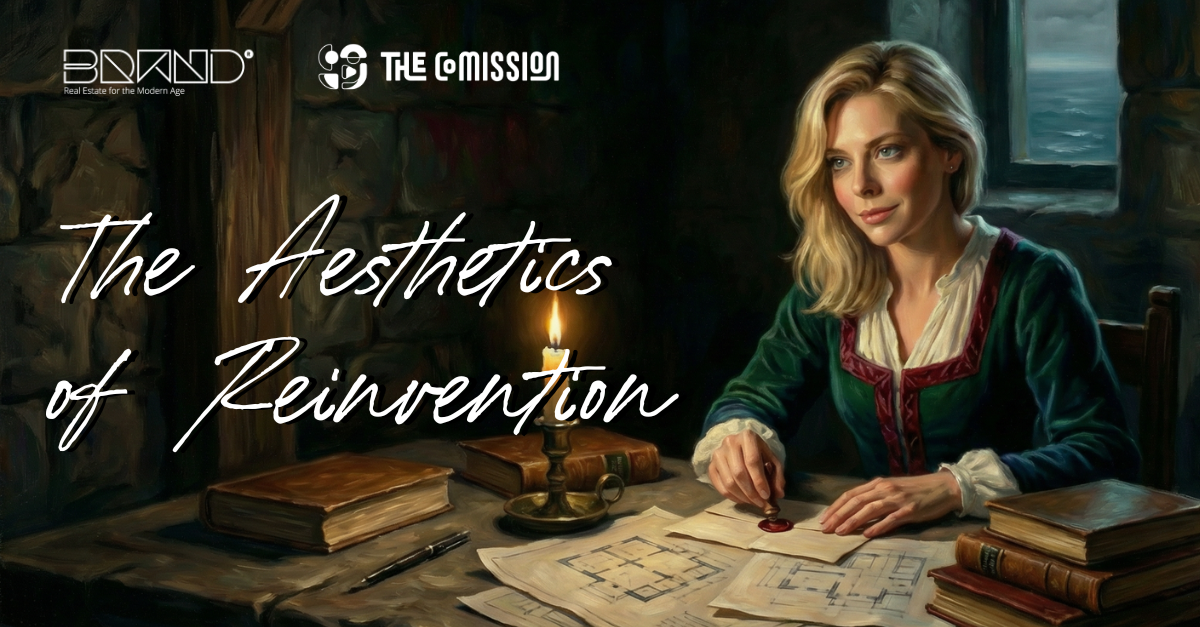
The Count of Monte Cristo has been on my reading list for years, it’s the kind of book you keep meaning to get to. When I finally picked it up, I was in a period of metamorphosis, and something about that timing was so apropos, a Winter arc if you will. Fair warning that some plot details follow, so if this one’s on your reading list consider yourself warned. I’m always looking for things that get me out of the comfort zone. I was looking to get into something with intellectual weight this Winter, something that demanded patience. And this read definitely fit the bill.
The beauty of Dumas is that he doesn’t rush you. He makes you work. For those unfamiliar with the novel: The Count of Monte Cristo follows Edmond Dantès, a young French sailor on the eve of his wedding and a promising captaincy, who is falsely imprisoned through the betrayal of men close to him. He spends years in a remote island fortress (the awful Château d’If) presumed forgotten. What emerges from that confinement is something the people who put him there never anticipated. By the time Dantès reenters society, wealthy, polished, and operating under a new identity, he has become a figure of almost mythic composure. Published in 1844, the novel spans decades and continents and runs to well over a thousand pages. Dumas clearly had no interest in brevity, and that is precisely the point. It is easy to think The Count of Monte Cristo as a novel about vengeance. The plot certainly invites that assumption. But revenge is the visible facade, not the foundation. The deeper subject is reinvention.

Dantès does not return from imprisonment seeking correction. He does not attempt to resume his former life with added caution or accumulated grievance. The earlier self is allowed to end. In its place emerges an identity constructed with deliberation. The reinvented Count is not a reaction. He is a self-authored character.
During his confinement, Dantès acquires languages, philosophy, science, and strategy. He studies systems and human behavior. He amasses capital and refines his presentation. By the time he reenters society, nothing about him is accidental. His entrances are calibrated.
Information is calculatingly revealed. Relationships are curated. Influence is exercised through timing rather than force. What reads as vengeance is, more precisely, orchestration.
The power of his return lies in control. He does not announce transformation. He just embodies it. It is perhaps not accidental that while reading Dumas, I found myself building the framework for a new service line (Executive Branding Package) intended for executives at inflection points, moments when reinvention must be structural rather than cosmetic. The novel did not inspire the work so much as affirm its necessity and Courtney and I can’t wait to unveil it! It seems like so many of us are at a major crossroads between the old and the new with forces like AI bringing upheaval.
Serious reinvention is not a matter of surface adjustments. A new headshot, a revised bio.. those are the end products of building a whole new foundation and structure. They follow the work. They do not constitute it.

What changes first is internal order.
Dantès emerges from confinement with a different relationship to time. He is no longer governed by urgency. He has studied patience. He has learned to delay gratification, to allow understanding to compound. His success unfolds because it is sequenced. Nothing is premature. Sequencing is an aesthetic judgment. It requires the ability to perceive what belongs now and what must wait. That ability is cultivated, through sustained exposure to standards that resist convenience. Literature that demands patience. Architecture that balances proportion and permanence. Music that withholds resolution before release. These encounters recalibrate perception. They refine one’s sense of timing, restraint, and coherence.
Silly side effect of this reading – since finishing the novel, I have had to stop myself from using the words “countenance” and “providence” in everyday conversation.
Observing Courtney’s serious countenance on a Monday morning, as we prepare a client relaunch that has been months in the making, feels suddenly like a literary event. The providence of a perfect property surfacing for a buyer at precisely the right moment feels almost pre-ordained, I can’t help but yell the word “Providence!” as loud as possible. Dumas uses the word with enough frequency (approx. 70 times!) and intention that it functions almost as a philosophical underpinning of the entire narrative. There are no mistakes in art.
Dumas’ words began to rearrange my internal vocabulary. And vocabulary shapes perception. The words available to you determine the distinctions you can make. Reading classic works also makes you a better writer of AI prompts. Language models are trained on the full breadth of written human expression, so a vocabulary confined to the 21st century leaves you working with a narrower instrument than you might realize. Older words carry depth and texture that modern shorthand rarely replaces.

The Count’s authority is sensorial as much as strategic. He understands pacing. He withholds. He reveals selectively. Excess does not tempt him. His interventions carry weight because they are proportionate.
In professional life, the pressures are less theatrical but no less real. There are moments when knowledge alone ceases to differentiate, we are watching this unfold with the AI revolution daily. Information alone does not accomplish that transition. It requires a reordering of presence, language, and judgment.
Reinvention at that level resembles architecture…External presentation must align with internal structural plans. That coherence does not arise accidentally, it must be examined and refined with intention. The latter requires discipline, and a willingness to engage work that stretches rather than flatters. Without that stretch, reinvention becomes theatrical. Mechanical performance without foundation. Just look at the public square of LinkedIn – the insufferable hellscape of self-congratulatory slop…it’s not real and soon enough the only valuable commodity will be that which is genuine, or so I hope.
The Count does not seek vindication. He seeks inevitability. By the time he acts, his position feels preordained. That is the novel’s quiet lesson. Vengeance animates the narrative, but becoming sustains it. The transformation is credible because it is earned, through study, resistance, and restraint. This winter has been constructive for me, in allowing the former self to end and a new invigorated person to emerge with Spring. But emergence is never accidental. What looks like bloom is simply the visible result of work done in obscurity and in its own way, Providential.
The world may misjudge a person once but it rarely misjudges coherence sustained over time.